

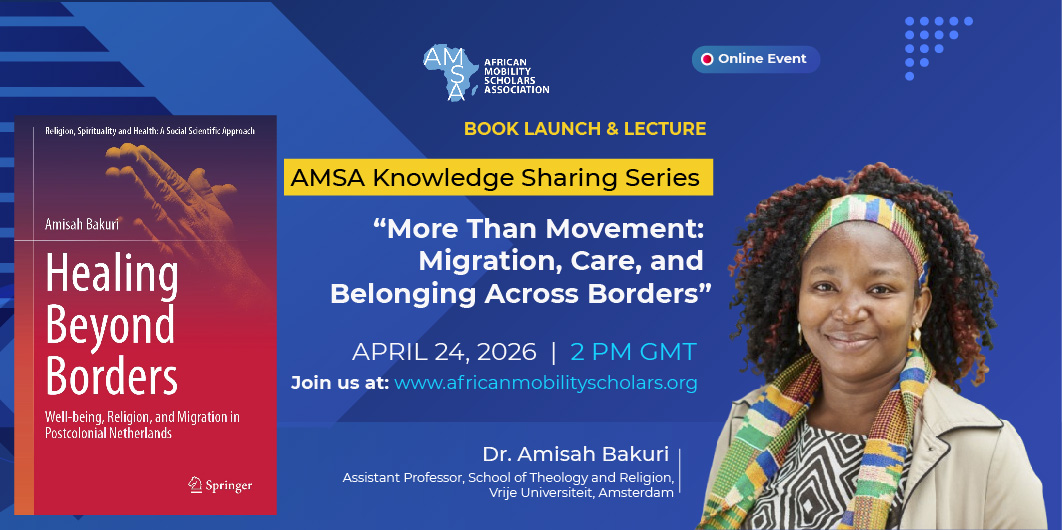
More Than Movement: Migration, Care, and Belonging Across Borders
This presentation is based on thirteen months of ethnographic fieldwork examining how Ghanaian and Afro-Surinamese Pentecostal communities in Amsterdam navigate daily life. Using participant observation, in-depth interviews, and attendance at religious gatherings, the research investigates how community members manage uncertainty shaped by ongoing migration processes and the lasting legacies of enslavement and colonialism. These communities are historically connected through Dutch involvement in transatlantic slavery in West Africa, including Ghana, where people were enslaved and forcibly taken to the Americas, especially Suriname.
Kinship and religion are essential to daily life in these communities. Pentecostal churches encourage members to see each other as “brothers” and “sisters.” Activities such as singing, prayer, Bible studies and shared meals build strong emotional connections and a sense of belonging. These relationships extend beyond the church, as individuals support one another by sharing housing, documents, and financial resources to navigate bureaucratic challenges and insecure living conditions.
The overlapping relationships within these communities can be understood as double siblinghood. One aspect is based on shared faith, and the other on shared historical experiences, especially the legacies of the Transatlantic Slave Trade. Building on existing research in anthropology and migration studies, this concept shows how migrants actively redefine and reshape kinship ties to serve both spiritual and practical purposes. The idea of double siblinghood highlights how spiritual and historical links create complex, layered forms of kinship in migration contexts. This approach illustrates how people form family bonds that respond to their social and historical circumstances. It also examines differences in power and access to resources among individuals and within communities.
I demonstrate how the Ghanaian and Afro-Surinamese communities in the Netherlands’ migration involve more than just movement. They also encompass the ongoing creation, maintenance, and discontinuation of relationships. Individuals and their communities build support networks to navigate uncertainty, but these networks are often characterised by tension. The sharing of resources and responsibilities can lead to conflict, especially when support is uneven or expectations are not met. Such tensions emphasise both the significance and the fragility of communal care within migrant life.
Keywords: migration, African diaspora, kinship, religion, care, Ghana, Suriname, Netherlands
Organizer
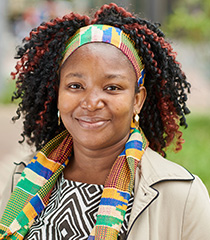
Amisah Bakuri (PhD) is an Assistant Professor at the School of Theology and Religion at Vrije Universiteit, Amsterdam. Her interdisciplinary research explores the intersections of religion, culture, identity, and sexuality. Her current work focuses on the historical legacies of missionary Christianity, colonialism, and slavery, and how they shape the religious identities of descendants of enslaved and colonised communities in the Netherlands. She is also the author of “Religious Sensibilities in Pursuit of Sexual Well-Being: African Diasporic Communities in the Netherlands“, which examines the intersection of religion, sexuality, and well-being within African diasporic communities in the Netherlands.