
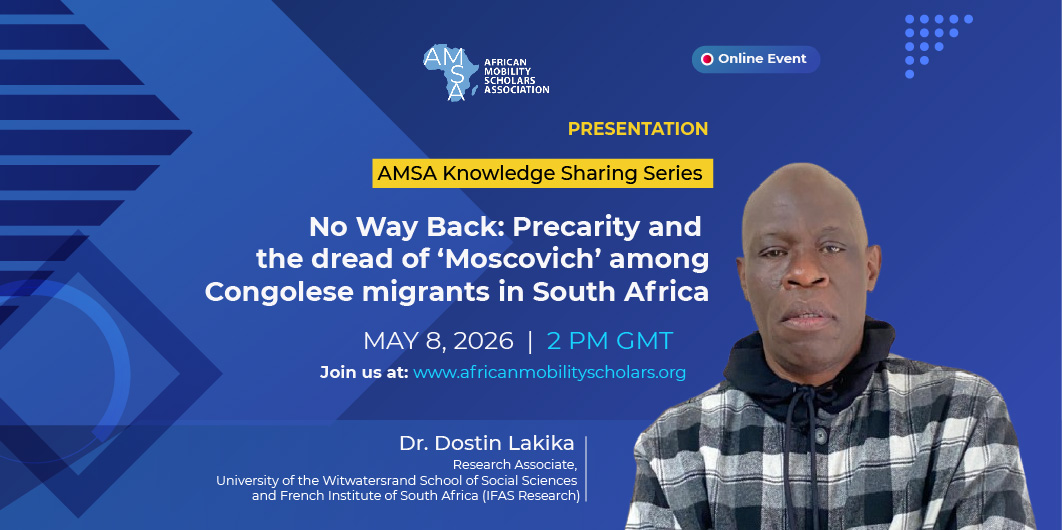
This meeting was a presentation by Dr. Dustin Lakika on the concept of “Moskovichization” – the fear of social stigma among Congolese migrants in South Africa who return without economic achievements. Dr. Lakika, an interdisciplinary social scientist from the University of the Witwatersrand, discussed how this stigma prevents migrants from returning to the Democratic Republic of Congo despite facing precarious conditions in South Africa. The presentation covered migration dynamics in South Africa, challenges faced by Congolese migrants including xenophobic attacks and documentation issues, and how social networks and social capital influence their decision-making. The discussion included insights into the asylum process in South Africa, which in practice often leads to prolonged uncertainty rather than the intended 6-month temporary permit. The presentation concluded with a Q&A session where participants discussed various aspects of migration, stigmatization, and the complex factors preventing Congolese migrants from either returning home or relocating to other countries.
Congolese Migration Stigma Research.
Dr. Dustin Lakika presented his research on “No Way Back: Moskovichization and the dread of Moscow among Congolese migrants in South Africa.” He explained how migration to Russia was historically unattractive to Congolese due to political and economic factors, and how the concept of “Moskovich” refers to the stigma faced by returnees who fail to bring wealth back to their communities. The presentation outlined the study’s focus on understanding how social perceptions and community expectations influence return migration decisions, using concepts such as social capital, habitus, and stigma to explore these dynamics.
Congolese Migration to South Africa.
Dr. Dostin presented on Congolese migration to South Africa, discussing social stigmatization of returnees who lack economic achievement and are nicknamed “Moskovich” as an insult. The presentation covered migration statistics, with 3.95 million foreign-born residents in South Africa in 2021, and historical context including the diplomatic relationship between DRC and South Africa starting in 1992 and the war that began in 1996.
Congolese Migrants in South Africa.
Dr. Dostin presented on the challenges faced by Congolese migrants in South Africa, highlighting that current estimates of 23,000 mid-1995 migrants are underestimated due to ongoing political unrest and displacement. He detailed the precarious legal status of migrants, including prolonged periods on temporary permits and high rejection rates of asylum claims, as well as the impact of xenophobic attacks and discrimination against foreign nationals. Dr. Dostin also described the living conditions in areas like Juve, where many migrants reside, and mentioned the historical significance of Newville as a gateway for migrants from various African countries.
Moscovitchization and Migrant Challenges.
Dr. Dostin presented on the concept of “Moscovitchization,” discussing the challenges faced by migrants in South Africa, including xenophobic violence, documentation issues, and living conditions. The presentation highlighted how social capital and emotional ties to children in South Africa have led many Congolese migrants to remain in the country despite hardships, rather than returning to Congo. Dr. Dostin explained that the fear of being labeled “Moscovitch” – referring to those who return empty-handed after years abroad – and the potential shame it would bring to both the individual and their family, contributes to the reluctance to return to Congo.
Migration Decision Factors Presentation.
The meeting focused on a presentation by Dr. Dustin Lakika about the concept of “Moskovich” and its impact on migrants’ decisions to stay or return to their home countries. Participants, including Prof. Leander and Frank, praised the presentation for shedding light on the complexities of migration, including the fear of stigmatization and lack of achievement as key factors preventing return migration. Dr. Lakika explained that the main reason migrants choose to stay is the lack of achievement, which makes it difficult for them to support themselves and their families upon return.
South Africa-DRC Migration Study Discussion.
Janet and Dostin discussed a study on migration patterns and returnees from South Africa to the DRC. Janet suggested considering the class character of participants and recommended examining the 2008 xenophobic attacks in South Africa for additional context. Dr. Dostin explained that while they couldn’t reach some returnees for interviews, they had observed videos of returnees complaining about their conditions and lack of survival means upon returning to the DRC. Dr. Dostin also noted that even professionals like doctors and engineers expressed reluctance to return to the DRC due to expectations from family and community members who assume they would provide financial support.
Congolese Migrant Goals to South Africa.
Dr. Lakika discussed the main goals of Congolese migrants to South Africa, explaining that while many seek a better life due to political and economic instability in the DRC, many use South Africa as a transit point to raise funds for relocation to other countries. He noted that Congolese migrants often use social networks based in South Africa to guide their migration decisions, and while some come as refugees seeking safety, the overall goal is to achieve better living conditions.
Congolese Migrants Community Support Initiatives
Dr. Lakika discussed the challenges faced by Congolese migrants in South Africa, highlighting how they have begun forming community support initiatives despite initial difficulties in organizing. He explained that social networks play a crucial role in helping migrants access employment opportunities, particularly in security industries, and provide essential support for medical treatments and funeral expenses. The discussion touched on how social capital helps mitigate the isolation and mental health challenges migrants face in an unwelcoming environment.
Felt Migration and Cross-Cultural Relationships
Dr. Dostin discussed the concept of felt migration, explaining that for many people, home is not a physical place of birth but rather where they find support and comfort. When asked about cross-marriages between South Africans and foreign nationals, Dr. Dostin noted that although intermarriage exists, it was not part of his study. He mentioned examples of Congolese-South African couples who use social media to promote positive cross-cultural relationships and downplay xenophobia. The discussion concluded with Hayford asking about whether Togolese migrants in South Africa could be considered trapped migrants due to concerns about being labeled as “Moscovich,” though this question was not fully answered in the transcript.
Palmolese Migrant Challenges in South Africa.
Dr. Dostin discussed the challenges faced by Palmolese migrants in South Africa, particularly highlighting how many skilled migrants have succeeded while unskilled migrants often find themselves trapped in difficult situations. He explained that many migrants are unable to return home due to family shame and lack of resources, leading some to fall prey to unscrupulous travel agencies offering false promises. Janet raised questions about diplomatic challenges around repatriation to third countries and suggested examining the role of international agencies and non-state actors in migration governance.
South Africa Refugee Procedures Overview.
The meeting focused on a presentation on asylum and refugee procedures in South Africa, during which Gifty asked questions about the asylum system and documentation processes. Dr. Dostin explained that asylum seekers receive temporary permits valid for 6 months, with decisions on refugee status taking time, though in practice the system faces significant challenges, including arbitrary permit renewals and unlawful arrests. The discussion also covered the pathway to permanent residency in South Africa, which now requires at least 10 years of refugee status before applicants can qualify, up from the previous 4-year period. The conversation ended with plans for future presentations and a request to share the slides and contact information for potential collaboration.